
Property owners near Delhi and Gurgaon are increasingly being approached about shoots, and most say yes without knowing what they have agreed to.
A film or photography unit is not a group of guests. It arrives early, it brings vehicles and equipment, it rearranges rooms, and it has requirements that have nothing to do with hospitality. Understanding those requirements is what separates a property that gets rebooked from one that gets a polite thank you and never hears from the agency again.
Here is what production actually looks for, from the other side of the recce.
Power comes first, every time
A location scout will ask about electricity before they ask about anything else, and the answer decides whether the conversation continues.
Lighting is heavy load. A modest commercial shoot can run several kilowatts of continuous light alongside monitors, chargers and a tethered workstation. In an area where the grid drops during the day, a property without full generator backup is effectively an unlit location, and the production has to hire and transport its own genset.
Twenty-four hour backup that can carry lighting load, not just keep the fans running, is the single most valuable thing a property can offer.
Vehicles need somewhere to sit
A unit arrives with more vehicles than most owners expect. A vanity van for talent. A light truck. Production cars. Fifteen to twenty crew vehicles on a mid-size shoot.
The vanity van is the awkward one. It is large, it needs level standing, and it needs to reach that standing without a difficult turn. If the only place it fits is the middle of the driveway, it will appear in every wide shot and spend the day being moved.
Dedicated vanity standing, away from the main setups, is a genuine selling point.
Three kinds of room, not one
Productions need rooms separated by function, and this is where most properties fall short.
Changing rooms
Costume needs a room that stays set up all day. Hanging space, a mirror, a plug, a door. A bedroom lent out between other uses does not work, because the room has to be reset every time somebody else needs it.
Talent rooms
Principal talent needs somewhere private with an attached bathroom, away from the unit area. Hair and make-up often runs there in parallel with the floor, which is how a shoot stays on schedule.
Crew facilities
The crew needs washrooms that are not the talent washrooms. On a unit of twenty-five, a single shared bathroom becomes a bottleneck by mid-morning and a source of friction by afternoon.
Food is a production problem
Crew meals are the most commonly underestimated part of a location day. Units eat at a fixed break, all at once, and a late or inadequate meal visibly slows the afternoon.
Most productions solve this by sending somebody out, which costs a crew member for over an hour. A property that can cater on site for the full unit, with reasonable notice and some flexibility on dietary requirements, removes an entire logistics chain and is remembered for it.
Setups are what you are really selling
Owners tend to describe a property by its bedrooms. Production counts backdrops.
What matters is how many visually distinct looks exist within walking distance of each other — an exterior, two or three unlike interiors, water, green, an approach, perhaps a kitchen. A property that yields eight to ten looks lets a unit complete a day without a company move, and avoiding a company move is worth more than almost anything else.
If you are listing a property for shoots, photograph the looks, not the rooms.
Sound, and permission to make it
Music videos and ad films need playback. Dialogue needs quiet. Both of those depend on the property.
Restrictions on amplified sound, common at properties set up for family stays, rule out entire categories of work. Distance from a main road matters just as much, because road hum is not fixable in post.
Clarity on what can be changed
Productions will want to move furniture, dress rooms and bring in set pieces. Most owners are fine with that and simply have not thought about it in advance.
Decide beforehand what is acceptable, what needs asking, and what is never allowed — drilling, painting, removing fixtures. Put it in the agreement along with the condition the property is returned in. Ambiguity on this is where location relationships break.
Weekdays are the opportunity
For a property that earns from weekend stays, production is close to free money, because it wants precisely the days that sit empty. Agencies, brands and crews work Monday to Friday. A weekday shoot booking does not displace a single weekend guest.
That is the whole commercial logic of opening a property to shoots, and it is why it suits farmhouses so well.
How We Woods is set up
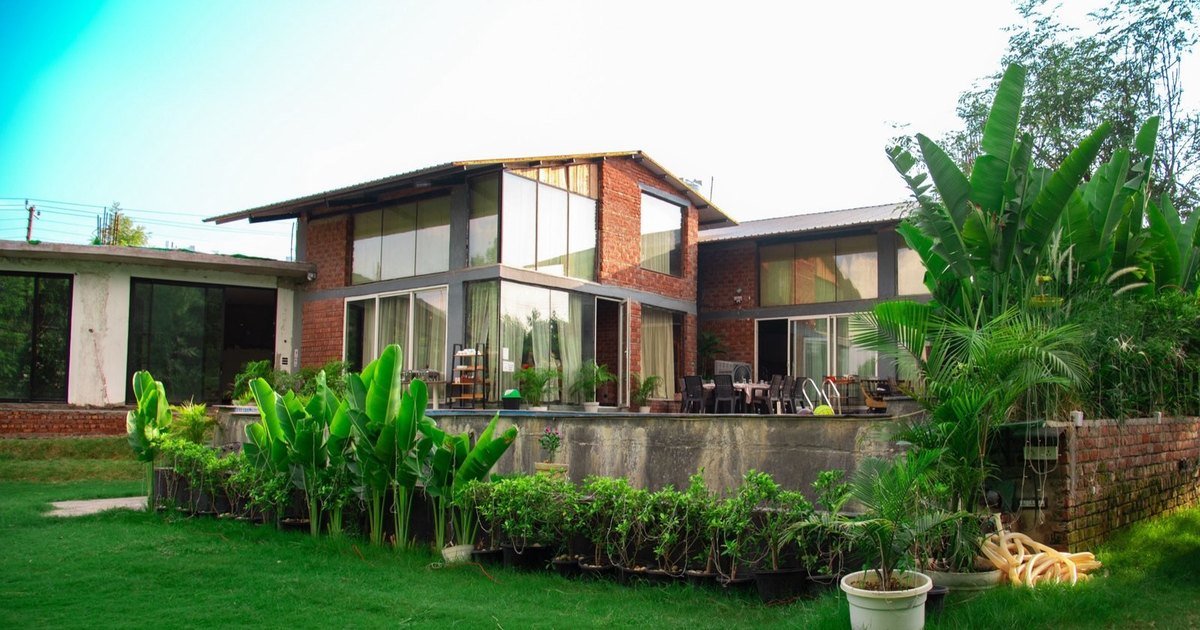
We Woods Farm in Manesar, about forty-five minutes from central Delhi and thirty from Cyber City, has been organised around exactly these requirements — twenty-four hour generator backup, dedicated vanity parking, separate changing rooms, superior rooms for talent, crew washrooms, and a farm kitchen that caters for the unit on site. Music and sound restrictions have been lifted for production bookings.
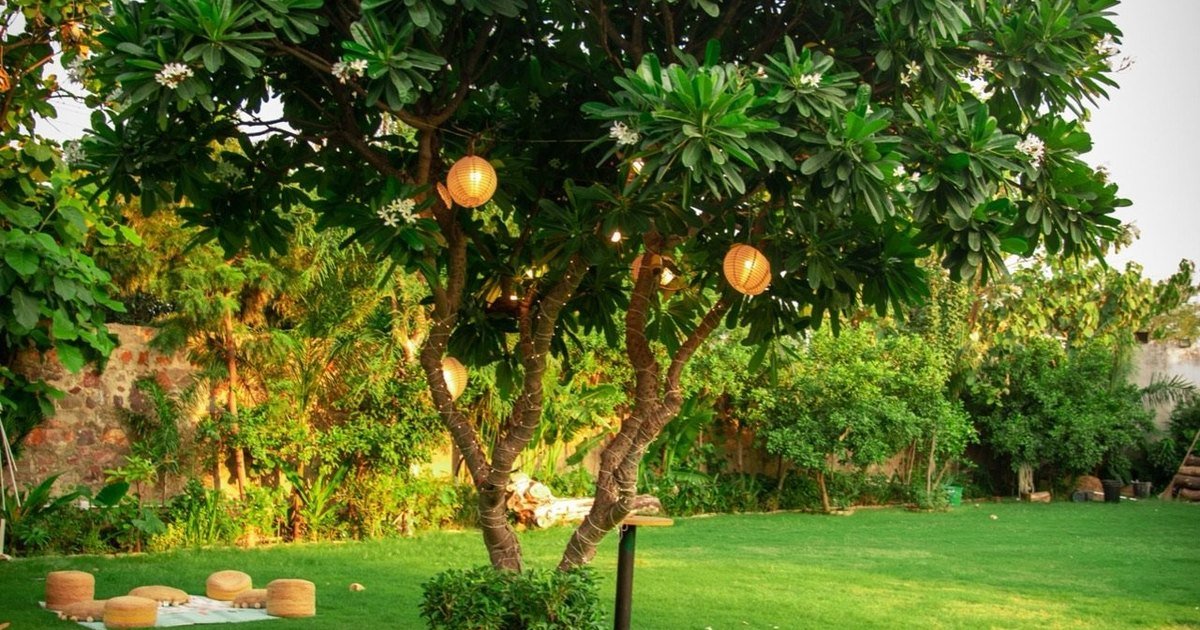
The property runs to roughly two acres with two villas, eight rooms, a chemical-free infinity pool, open lawns and a working organic farm, which between them give a unit a good number of distinct setups without leaving the gate. Details are on the shoot location page.
In summary
Power, parking, three kinds of room, food, setups, sound and a clear agreement. Get those seven right and a location becomes one a production will come back to. Miss any of them and the shoot happens once.
We Woods Farm — a private farmhouse in Manesar, Gurugram, 45 minutes from Delhi. One booking a day, so the whole farm is yours. WhatsApp or call 9953111000 to check a date.