
Finding the right venue for a corporate event near Delhi requires balancing several practical concerns: travel time, facilities, capacity, and the ability to keep your team focused without urban distractions. The National Capital Region has many options, but most fall into a familiar set of patterns—hotels with standard meeting rooms, banquet halls with inflexible layouts, or distant resorts that demand long commutes. The best choice depends on what your event is actually meant to achieve.
This guide walks through the key factors to consider, and how to evaluate whether a venue will genuinely serve your needs or simply tick boxes on a booking form.
Understand Your Event Type and Purpose
Before touring venues, be clear about what you are organising. Are you running a strategy session that requires quiet, focused time? A team-building day with outdoor activities? A client reception or product launch? An offsite where your people sleep overnight? Each demands different things from a space.
A hotel ballroom works well for a half-day training session or large formal dinner. It won’t work for a two-day offsite where you want your team away from email and the office mindset. A farmhouse with multiple rooms, outdoor space, and on-site dining works better for overnight stays and mixed activities—but only if it has the right facilities and isn’t cramped.
Write down your core requirements first. How many people? How many days or hours? Do you need sleeping rooms? Will you hold sessions indoors, outdoors, or both? Do you want to arrange meals on site or order catering? Will activities matter, or is this purely about meetings and meals? This clarity makes the venue search much faster and prevents you wasting time on unsuitable places.
Distance and Travel Time Matter More Than You Think
A venue thirty minutes away sounds reasonable until your team spends four hours in traffic getting there. Cumulative travel time is a hidden cost of any offsite—in lost productivity, in fatigue, and in the difficulty of keeping people engaged when they arrive tired.
Venues within 30 to 45 minutes of central Delhi, Gurgaon, or Cyber City are genuinely more useful than those further out. The Manesar area on NH48, about 30 minutes from Gurgaon and 45 minutes from Delhi, offers a meaningful distance away from the office without becoming a half-day journey. This matters. If your people are spending more than an hour getting there, you need a very good reason—either exceptional facilities or an overnight stay that justifies the travel.
Also consider parking. A farmhouse that fits 9 to 11 cars comfortably serves a team of 10 to 22 people well. If you’re bringing more guests than the parking allows, you create logistical friction from the moment people arrive.
Exclusive Use Versus Shared Spaces
Many venues rent out multiple spaces to different groups on the same day. This means shared lobbies, lifts, car parks, and dining areas. For a corporate offsite, this is almost always a mistake. Your team cannot relax, conversations leak, and the environment feels like a hotel rather than a dedicated space.
When the entire property is rented exclusively—no other guests, no shared facilities—your team has psychological permission to step away from formality. People talk more openly over meals. Activities feel less performative. This matters more for a two-day offsite than for a three-hour training session, but it matters.
Facilities That Actually Support Your Program
Once you have narrowed down venues by distance and exclusivity, evaluate what they actually offer.
Meeting and Activity Space
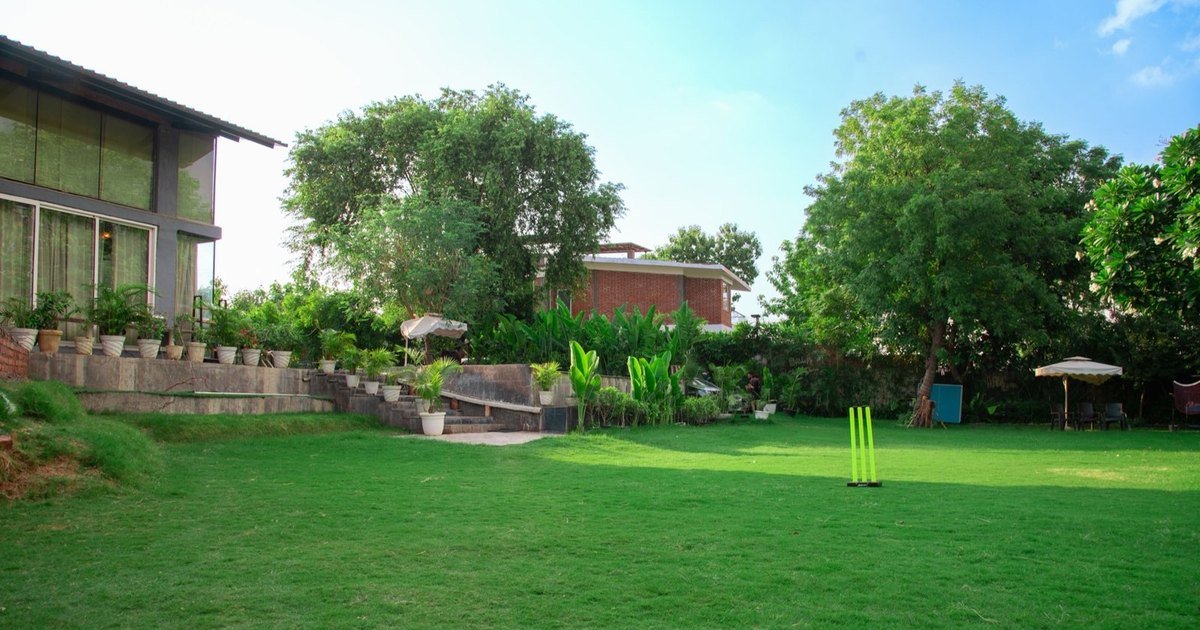
A corporate team outing needs more than a meeting room. It needs flexibility—breakout spaces, outdoor areas, room to move. If your program includes both sessions and activities, the venue should support both without moving everyone around constantly. A farmhouse with multiple rooms, outdoor grounds, and flexible layouts serves this better than a hotel with fixed ballrooms.
Meals and Catering
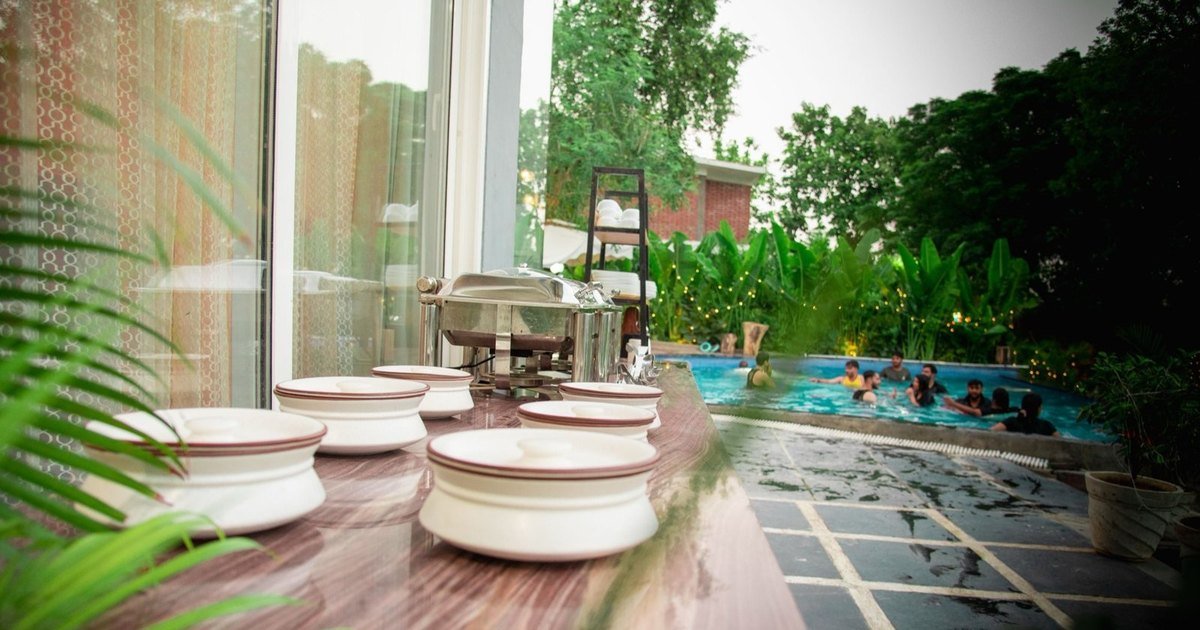
How meals are handled shapes the whole day. A hotel that sends staff with trays creates formality. A farm kitchen with an in-house chef who can serve farm-to-table meals creates a different atmosphere—one where eating is part of the experience, not an interruption. If your team will be on site for two days, the quality of meals matters more than most people expect. Poor food becomes the main memory of an otherwise good offsite.
Sleeping Accommodation
For overnight events, you need enough rooms and they need to be comfortable. A 6 bedroom farmhouse across 2 private villas comfortably houses 10 to 22 guests, with additional rooms available for larger groups. Multiple villas, rather than rooms along a hotel corridor, give people privacy and a sense of staying somewhere different.
Activities and Amenities
If your program includes team building or evening recreation, the venue should have what you need already on site. Cricket, table tennis, badminton, and mini golf are straightforward options that work for mixed ability levels. A bonfire for an evening gathering is simple but creates space for conversation away from formal settings. A swimming pool adds another dimension—but it should be safe, well-maintained, and ideally chemical-free if people are sensitive. Some people will use it; those who don’t still benefit from seeing it as an option.
Infrastructure and Contingency Planning
Check the basics that go wrong at worse times: power backup, internet reliability, and parking. If your offsite requires video calls, presentations, or live streaming, a 24-hour generator backup matters. If you have 15 people and only space for 6 cars, your first session starts with logistical stress.
Ask about internet bandwidth, not just availability. Many farmhouses have decent WiFi for light use but slow down when everyone is on video calls or uploading files simultaneously.
Specialist Uses: Film and Photo Shoots
If your corporate event includes photography, videography, or a product shoot, the venue needs to support that infrastructure. A good photo and film shoot location has adequate power, changing rooms and vanity facilities for any talent, separate crew areas and catering, and good natural light. Farmhouses with diverse landscape—buildings, trees, open ground—often work better than hotels for visual variety.
Making the Final Decision
Once you have narrowed your options to two or three, visit in person. Spend time imagining your actual event there. Walk from the car park to the meeting rooms. Sit in the spaces where you will hold sessions. Check sightlines, noise levels, and natural light. Ask the team there how they would handle your specific requests—overnight stays, catering for 16 people, afternoon activities, and breakfast timing.
Ask about what flexibility they offer. Can you change mealtimes if your sessions run late? Can you rearrange rooms? Do they have experience with corporate offsites, or are they mainly set up for weddings? Experience matters because your team has needs different from wedding guests.
Take photos and notes, and compare venues side by side using your original requirements list. The right choice is the one that reduces friction, supports your actual program, and feels like a deliberate choice rather than a convenient option.
Get in Touch
If you are looking for a venue for a corporate offsite, team outing, or event near Delhi that combines exclusive use, good facilities, and proximity to the city, reach out to We Woods Farm via WhatsApp or call 9953111000. They can discuss your specific requirements and help you understand whether the property and their approach fit your needs.
