
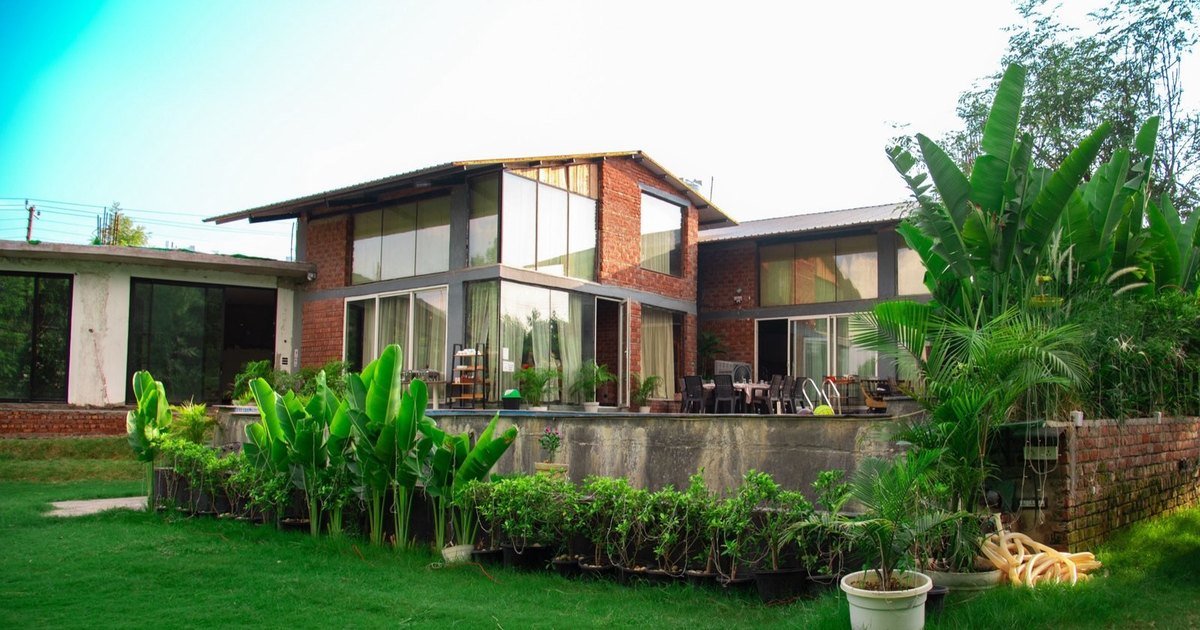
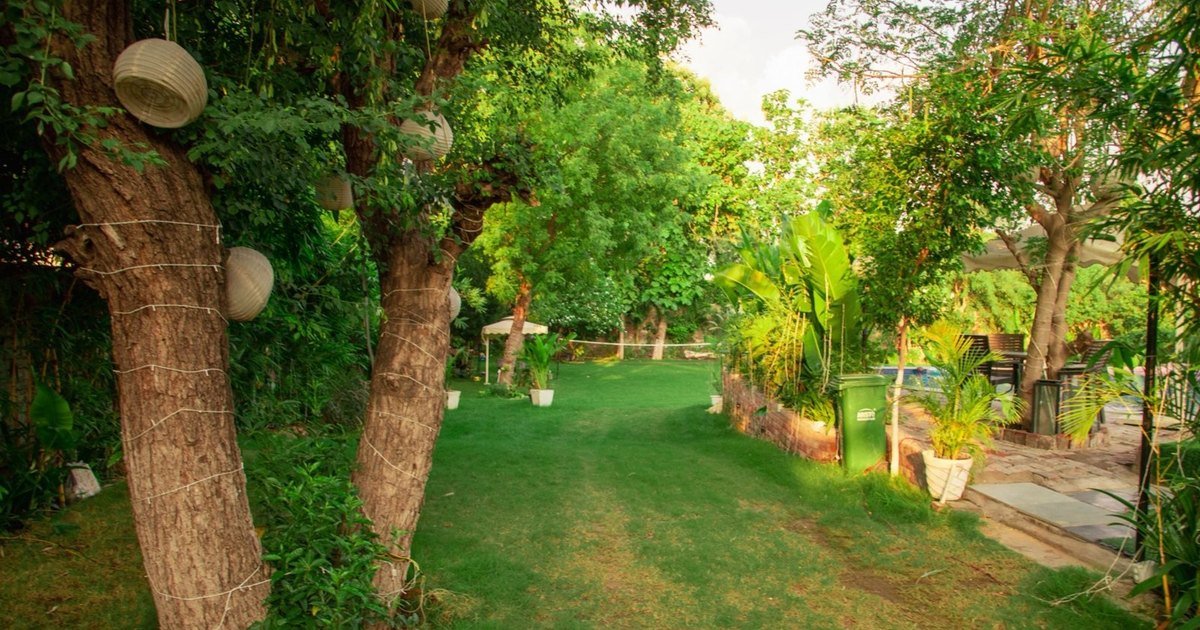
The question comes up often when guests arrive at We Woods Farm: “Where does all this food come from?” They point at the salad, the vegetables in the curry, the fresh herbs scattered across the plate. The answer is simple—most of it grows on the farm, a few hundred metres from where they’re sitting. This curiosity about organic food has become one of the most frequent conversations we have with visitors, and it reflects a wider shift in how people in Delhi NCR think about what they eat.
Organic farming and organic eating are no longer niche topics confined to wellness blogs. Families planning weekend getaways, corporate groups organising team outings, and people hosting celebrations all want to know: what’s the real difference? Is it worth it? What should I actually look for? We’ve heard these questions enough times to know what matters most to people—and it’s rarely the marketing speak. It’s about health, taste, and understanding what’s really on the plate.
This guide covers what guests ask us most, grounded in straightforward facts and practical perspective.
What Organic Actually Means
Organic food is grown without synthetic pesticides, artificial fertilisers, or genetically modified seeds. That’s the technical definition, and it’s worth knowing because it shapes everything else.
In India, organic certification follows the National Programme for Organic Production (NPOP) standards. A farm must maintain soil health through natural means—crop rotation, composting, biological pest control—for at least three years before it can be certified. It’s a slower, more deliberate way of farming than the conventional alternative.
The reason this matters to guests is practical: it changes how the food is grown, what ends up in the soil, and ultimately what’s in the food itself. There’s no mystery or mysticism to it. It’s a different system with different inputs.
The Health Argument: What the Evidence Shows
People often ask whether organic food is genuinely healthier. The honest answer is nuanced.
Research consistently shows that organic produce contains lower residues of synthetic pesticides compared to conventionally grown crops. For certain produce—leafy greens, berries, apples—the difference is measurable. If you’re concerned about pesticide exposure, particularly for young children, this matters. It’s one reason families choosing a birthday party farmhouse near Delhi often ask specifically about the sourcing of food for their events.
Organic farming also tends to preserve soil microbiota better than intensive conventional farming. Healthy soil produces more nutrient-dense crops. Some studies suggest organic vegetables contain higher levels of certain minerals and antioxidants, though the differences are usually modest—typically 10 to 20 percent higher, not double or triple. It’s real but not dramatic.
What organic food is not: a cure-all, a substitute for a balanced diet, or automatically more nutritious in every way. An organic biscuit is still a biscuit. The real advantage lies in what’s absent—the synthetic residues—rather than in miraculous added benefits.
Taste and Freshness: The Difference You Can Detect
This is where guests most consistently notice a difference.
When vegetables are harvested from a farm minutes before they reach the kitchen, they taste sharper, more alive. The tomato tastes like tomato. The spinach has mineral bite. Part of this is freshness—produce loses flavour the moment it’s picked—but part is also variety. Organic farms often grow heirloom or heritage varieties chosen for flavour rather than shelf life or shipping durability. A supermarket tomato is bred to survive a journey across five states. A farm tomato is bred to taste good.
Our in-house chef works with what’s in season on the property at any given time. In peak season, the kitchen menu changes weekly because the harvest changes. It’s a constraint that becomes an advantage—the food is genuinely fresh, and it tastes like it.
For guests planning extended stays, particularly those hosting corporate team outings or multi-day celebrations, this freshness accumulates. Day three or four of farm-to-table eating, people notice the difference in how they feel and how the food makes them feel.
Environmental Impact: The Longer View
Guests often ask about the environmental side, particularly those with children. Organic farming’s environmental benefits are more substantial than its direct nutritional advantages.
Synthetic pesticides and fertilisers require significant energy to produce. They run off into groundwater, affecting aquifers that supply drinking water across much of North India. They reduce soil microbial diversity, which weakens the soil’s capacity to hold water and carbon. Over time, intensive conventional farming depletes soil faster than it can be replenished.
Organic systems work differently. They build soil rather than deplete it. They don’t rely on off-farm chemical inputs. For a region like Haryana, where water stress is real and soil health is already compromised in many areas, this matters. A working organic farm like ours isn’t just producing food; it’s maintaining the land in a way that can continue indefinitely.
This is partly why families seeking an intimate wedding venue or a retreat space increasingly prefer farmhouse settings with genuine agricultural practices. The environment of the place—what the land itself looks like and how it’s managed—becomes part of the experience.
Practical Cost Considerations
The price question comes up immediately. Organic produce typically costs more than conventional produce. Why?
Organic farming is more labour-intensive. There are no herbicide shortcuts; weeds are managed by hand or mechanical means. Pest management requires monitoring and targeted intervention rather than blanket spraying. Yields per acre are often lower. Certification has administrative costs. All of this feeds into the final price.
Whether it’s worth the premium depends on your priorities and budget. If you’re buying everything organic, it will cost more. If you’re selective—prioritising organic for produce you eat raw or frequently, like berries and leafy greens, while accepting conventional for thick-skinned produce you’ll peel anyway—you can manage the cost more reasonably.
At We Woods Farm, the advantage is different. When guests are staying with us for a celebration or event, the food is included in the experience. There’s no separate premium for organic simply because you’re not buying it retail; it’s part of what the farm produces and our kitchen team prepares. For a photo and film shoot location requiring on-site catering, or for a multi-day family gathering, this works out favourably compared to sourcing everything externally.
How to Choose Organic: A Practical Framework
Guests who want to incorporate more organic produce but can’t afford it all often ask for a priority list. Here’s what makes sense:
- Prioritise organic for produce you eat raw and eat frequently: berries, leafy greens, tomatoes, cucumbers, bell peppers. These are high-pesticide crops and avoid cooking, which degrades some residues.
- Conventional is more defensible for thick-skinned produce you’ll peel: bananas, avocados, citrus, squash. Pesticide residues don’t penetrate as readily.
Buying directly from farms when possible—which is what we offer to guests here—bypasses retail markups. The produce is fresher, cheaper than supermarket organic, and you know exactly where it comes from.
Getting Started: Where to Source Organic Produce Near Delhi NCR
For those living in or around Delhi NCR, options have expanded considerably. Several farms now operate regular delivery subscriptions. Weekly farmers’ markets in Gurgaon, Noida, and Delhi offer direct-from-farm purchases. Some online platforms have begun stocking verified organic producers from surrounding areas.
The trade-off with any sourcing method is consistency and variety. Farms produce what’s in season. You can’t buy tomatoes in December at a price that makes sense. But seasonal eating—and the variety that comes with it—is part of how organic systems work.
Connect With Us
If you’re interested in experiencing farm-to-table organic meals firsthand, or planning an event where this approach matters to you, We Woods Farm is set up for exactly that. We’re located in Manesar on the Kherki-Hasanpur Road, about 30 minutes from Gurgaon and roughly 45 minutes from central Delhi via NH48.
For details about accommodation, catering, available dates, or to discuss your specific needs, reach out via WhatsApp or call 9953111000. Our team can walk you through what’s available, what’s in season, and how to structure your stay.